



Whether sweating heavily leads to weight loss is a common question when people notice a drop on the scale right after a workout. However, does this weight reduction actually come from fat, or mainly from water lost through sweat? The article below clarifies the physiology of sweating, the benefits and risks of excessive sweating, and effective ways to burn calories to support weight management.
The nature of sweating: water loss or fat loss?
During exercise, the body uses energy to generate movement while producing a significant amount of heat. Exercise physiology research shows that only about 20–25% of metabolic energy during physical activity is converted into mechanical work, with most of the remaining energy released as heat. As core body temperature rises, the nervous system triggers cutaneous vasodilation and increased sweating to support thermoregulation.
Sweat effectively cools the body only when moisture on the skin surface evaporates. According to thermoregulation studies, the evaporation of 1 kg of sweat releases approximately 580 kcal of heat energy. This figure represents heat transferred from the body to the environment during cooling—not an extra 580 kcal of metabolic energy burned by the body. Therefore, sweating more does not mean your body is burning proportionally more calories or losing more fat.
In addition, sweating causes fluid loss. Studies on acute dehydration show that changes in body mass can be used to estimate water loss, where a 1 kg drop in body mass roughly corresponds to 1 L of water. During exercise, sweat rates typically range from 0.5 to 2 L/hour, depending on exercise intensity and environmental conditions.
Accordingly, if your weight drops immediately after a sweaty workout, that reduction primarily reflects water lost from the body rather than fat burned.
Sweat volume can also vary considerably from person to person. Many factors influence sweat rate, including exercise intensity, ambient temperature and humidity, airflow, body size and composition, heat acclimatization, aerobic fitness, clothing, and hydration status. As a result, someone who sweats more is not necessarily expending more energy than someone who sweats less.

Sweat volume and rate vary significantly between individuals due to multiple factors

So does sweating heavily make you lose weight?
Heavy sweating can cause a temporary drop on the scale due to water loss, but sweat volume cannot be used to determine how much fat you have lost.
A study of 17 runners illustrates this clearly. Participants completed a 12 km run in a hot environment under both hydrated and dehydrated conditions. After the run, body mass loss in the dehydrated state was about 4.30–4.59%, compared with only about 2% when adequately hydrated.
However, sweat rates did not differ significantly between the two conditions. In the trial, average sweat rate was about 1.57 L/hour when hydrated and 1.45 L/hour when dehydrated. These findings demonstrate that the degree of weight management immediately after exercise is significantly influenced by hydration status, while sweat output cannot be used to directly infer how much energy or fat was expended.
Notably, participants also completed the run faster when adequately hydrated, averaging about 53.15 minutes compared with 55.7 minutes when dehydrated. This shows that deliberately dehydrating the body does not make a workout more effective; on the contrary, it can impair physical performance.
Therefore, you should not judge the effectiveness of a workout solely by how much you sweat or how much weight you lose immediately afterward.

Heavy sweating can cause temporary weight reduction from fluid loss, but sweat volume cannot measure fat loss

Benefits and risks of excessive sweating
Sweating is an essential physiological response that helps the body regulate temperature during exercise. When ambient temperature rises and approaches skin temperature, heat dissipation through other mechanisms decreases, making sweat evaporation one of the primary pathways for cooling the body.
However, if excessive fluid is lost through sweat without adequate replacement, dehydration can occur. Exercise physiology research indicates that once fluid loss reaches about 2% or more of body mass, endurance performance can begin to decline noticeably.
A study conducted during exercise in the heat also noted that for each additional ~1% body mass loss during a run at the same intensity, core body temperature rose by about 0.22°C and heart rate increased by roughly 6 beats/min. Dehydrated individuals also exhibited higher post-exercise core temperatures compared with when adequately hydrated.
As dehydration and heat accumulation progress, the risk of heat-related health issues rises accordingly. Sports medicine guidelines generally emphasize limiting body mass loss to no more than 2% during exercise and replenishing fluids appropriately to match water losses.
In particular, avoid intentionally wearing multiple layers or overly occlusive clothing just to induce heavier sweating. Clothing that traps moisture against the skin impairs sweat evaporation, thereby hindering heat dissipation and increasing the risk of heat-related illness.
Thus, the primary role of sweating during exercise is to support thermoregulation, rather than to burn fat or rapid weight loss further.
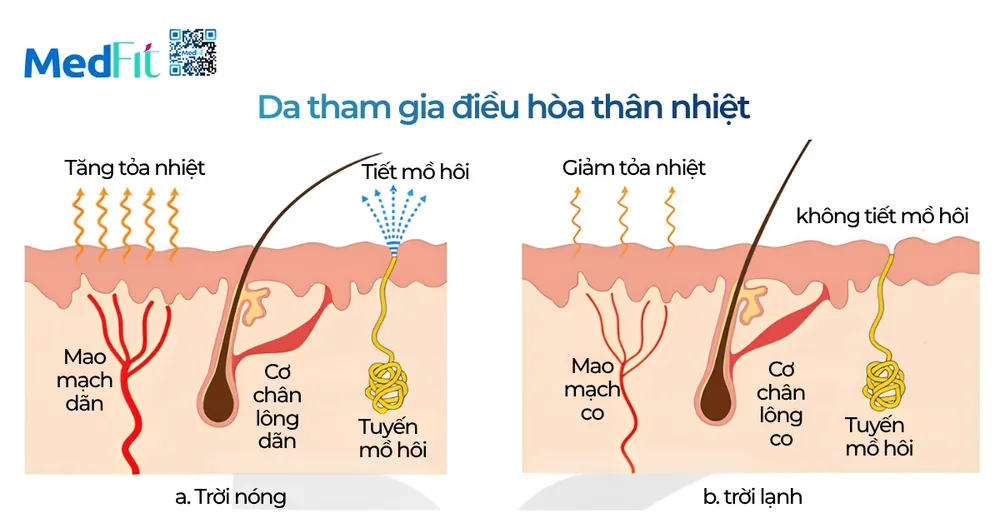
The primary role of sweating during exercise is to support thermoregulation, not to burn fat or accelerate weight loss
Effective ways to burn calories without relying on sweat
Instead of using sweat volume to evaluate a workout, you can rely on an activity’s energy expenditure measured by MET.
According to the 2024 Adult Compendium of Physical Activities, 1 MET equals a standardized resting metabolic rate of approximately 3.5 mL oxygen/kg/min:
- Light-intensity activities: typically range from 1.6 to 2.9 MET.
- Moderate-intensity activities: approximately 3.0–5.9 MET.
- Vigorous-intensity activities: 6.0 MET and above.
- Energy expenditure can be estimated using the formula: kcal/min = MET × 3.5 × body weight (kg) / 200, then multiply by exercise duration.
For example, for a 50 kg person playing badminton for 30–60 minutes, estimated energy expenditure is about 145–289 kcal at 5.5 MET, about 184–368 kcal at 7.0 MET, and about 236–473 kcal at 9.0 MET. This shows that as exercise intensity and duration increase, total energy expenditure also rises. Sweat volume is not part of this calculation, so sweating heavily does not mean your body has burned more calories or lost more fat.
However, MET is only a standardized value. Actual energy expenditure still varies between individuals based on age, sex, height, weight, body composition, and resting metabolic rate. Thus, MET serves as a useful reference for relative activity intensity and expenditure, rather than an exact absolute calorie count for everyone.
When exercising for weight management, the key is not trying to sweat as much as possible, but choosing suitable activities, maintaining sufficient duration, and adjusting intensity to your fitness level. At the same time, prioritize proper hydration to prevent dehydration from impairing exercise performance.
In summary, sweat indicates that your body is working to dissipate heat, not how much fat it has burned. A low-sweat workout can still expend substantial energy, whereas forcing excessive sweating mainly increases fluid loss and can diminish training performance.

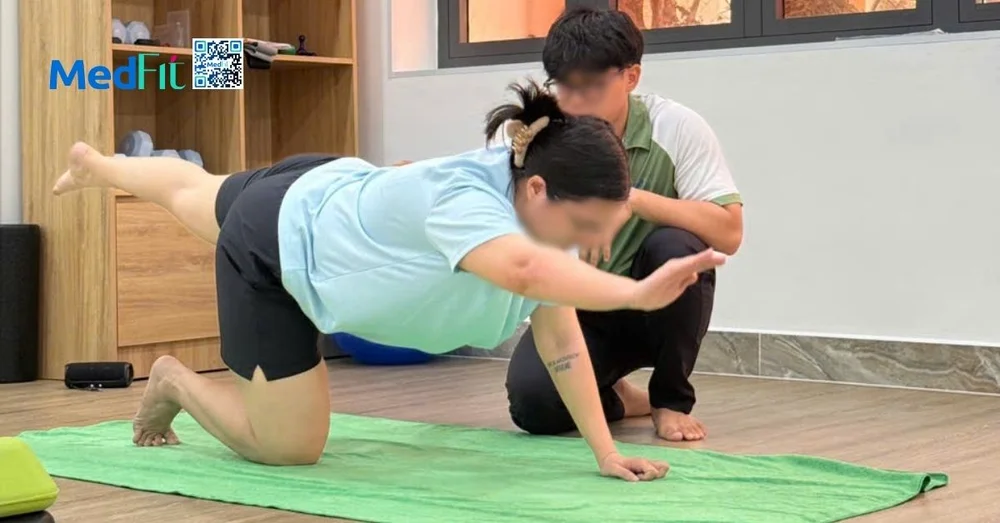
Train with a coach at MedFit for effective workouts tailored to your fitness level
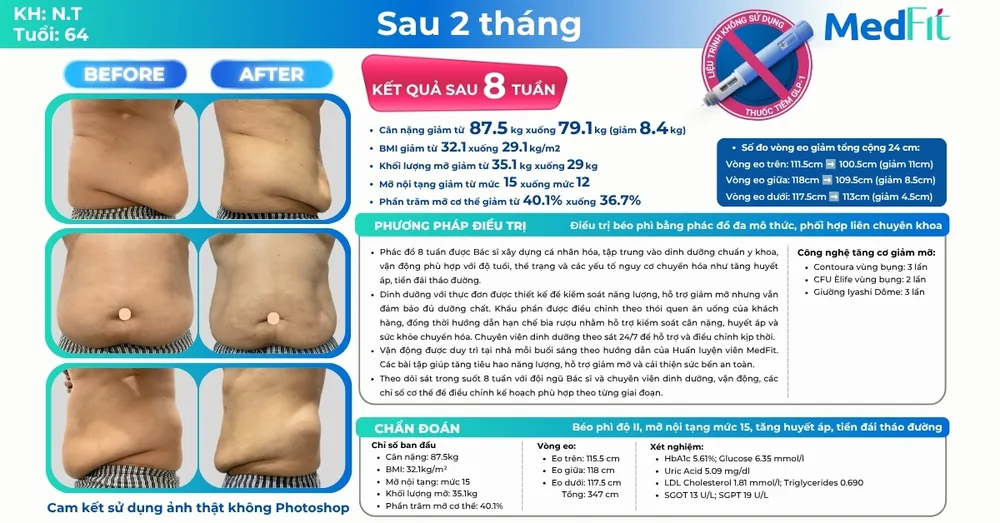
Weight-Loss Clinical Cases at MedFit Clinic
Sweating heavily does not mean your body is burning more fat. Any weight drop immediately after exercise comes primarily from water loss and will return once you rehydrate adequately.
For effective weight management, focus on sustaining appropriate energy expenditure through exercise intensity, duration, and frequency, combined with your diet that creates a reasonable calorie deficit. At the same time, stay properly hydrated and avoid intentionally wearing overly occlusive clothing or training in hot environments just to sweat more, as this does not accelerate fat loss and may reduce performance while increasing the risk of heat-related issues.
If you are aiming for weight management but are unsure how to begin with diet or exercise, MedFit can accompany you with a weight management roadmap tailored to your health status, lifestyle habits, and personal goals. At MedFit, doctors, nutrition specialists, and trainers collaborate on a comprehensive assessment to create a multimodal, personalized plan for weight management that is safe, effective, and delivers sustainable long-term results.
References
- Herrmann SD, Willis EA, Ainsworth BE, Barreira TV, Hastert M, Kracht CL, et al. 2024 Adult Compendium of Physical Activities: a third update of the energy costs of human activities. J Sport Health Sci. 2024;13(1):6–12. doi:10.1016/j.jshs.2023.10.010
- Cheuvront SN, Kenefick RW. Dehydration: physiology, assessment, and performance effects. Compr Physiol. 2014;4(1):257–285. doi:10.1002/cphy.c130017
- Périard JD, Eijsvogels TMH, Daanen HAM. Exercise under heat stress: thermoregulation, hydration, performance implications, and mitigation strategies. Physiol Rev. 2021;101(4):1873–1979. doi:10.1152/physrev.00038.2020
- Casa DJ, Stearns RL, Lopez RM, Ganio MS, McDermott BP, Yeargin SW, et al. Influence of hydration on physiological function and performance during trail running in the heat. J Athl Train. 2010;45(2):147–156. doi:10.4085/1062-6050-45.2.147
- Casa DJ, DeMartini JK, Bergeron MF, Csillan D, Eichner ER, Lopez RM, et al. National Athletic Trainers’ Association position statement: exertional heat illnesses. J Athl Train. 2015;50(9):986–1000. doi:10.4085/1062-6050-50.9.07
Baker LB. Sweating rate and sweat sodium concentration in athletes: a review of methodology and intra/interindividual variability. Sports Med. 2017;47(Suppl 1):111–128. doi:10.1007/s40279-017-0691-5