



When beginning to adjust their diet for weight management, many people tend to pay closer attention to familiar vegetables in everyday meals. Bitter melon is one such option, frequently appearing in meal plans shared for healthy eating and staying fit. However, the popularity of a food does not mean everyone should consume it the same way or expect identical results. In this article, MedFit will examine bitter melon in detail and how it is typically incorporated into a weight-management diet.
- 1. Benefits of bitter melon for health
- 2. Does eating bitter melon help with weight loss?
- 3. How to prepare bitter melon to effectively support fat reduction
- 3.1. Bitter melon weight-loss meal plan Day 1 – approx. 862 kcal
- 3.2. Bitter melon weight-loss meal plan Day 2 – approx. 884 kcal
- 3.3. Bitter melon weight-loss meal plan Day 3 – approx. 871 kcal
- 4. Mistakes to avoid when using bitter melon for weight loss
Benefits of bitter melon for health
Bitter melon is a low-calorie fruit rich in vitamins, minerals, and beneficial antioxidant compounds. Each 100 g of fresh bitter melon provides only about 21 kcal, along with 2 g of fiber, vitamin C, vitamin A, and essential minerals such as calcium, potassium, zinc, magnesium, and phosphorus.
In particular, bitter melon is rich in vitamin C, a vital micronutrient involved in immune function, collagen synthesis, wound healing, and protection against oxidative stress. It also contains numerous antioxidant compounds such as catechin, gallic acid, epicatechin, and chlorogenic acid, which help neutralize free radicals, potentially reducing cellular damage and lowering the risk of certain chronic diseases.
Additionally, some studies suggest that bitter melon may support blood sugar regulation by improving the body’s glucose utilization and stimulating insulin secretion. Because bitter melon contains fiber and is low in calories, it can also support digestive health and increase satiety. Preliminary studies further indicate that bitter melon may help improve blood cholesterol levels and possess anti-cancer properties, though most current evidence comes primarily from animal or laboratory studies.

Nutrition facts in 100 g of fresh bitter melon

Does eating bitter melon help with weight loss?
Bitter melon is not a food with direct weight-loss effects or strong fat burning properties. However, this fruit can still support weight management thanks to its beneficial metabolic bioactive compounds and relatively high fiber content.
First, bitter melon provides about 2 g of fiber per 100 g, which helps slow digestion and gastric emptying, thereby prolonging satiety and helping control daily food intake. Furthermore, bitter melon contains active compounds such as saponins, triterpenoids, polyphenols, and insulin-like peptides, which are thought to improve insulin sensitivity, enhance glucose uptake in tissues, and promote the use of fat for energy.
Some animal studies have also noted that bitter melon may reduce the accumulation of visceral fat, decrease inflammation in adipose tissue, and improve obesity-related metabolic disorders.
However, when evaluated in humans, the results have not been truly conclusive. A meta-analysis of 10 clinical trials involving 448 participants found that bitter melon supplementation did not significantly reduce body weight, BMI, waist circumference, or body fat percentage. This indicates that although bitter melon exhibits several potential mechanisms supporting metabolism, there is still insufficient evidence to confirm that eating bitter melon directly promotes weight loss or fat reduction significantly in humans.
Therefore, bitter melon can be considered a healthful vegetable and a worthwhile addition to a balanced diet. However, it should not be viewed as a targeted weight-loss food or relied upon to reduce body fat. Effective weight management still depends primarily on a balanced diet, an appropriate calorie deficit, and regular physical activity.

How to prepare bitter melon to effectively support fat reduction
When incorporating bitter melon into a weight-management diet, the cooking method is just as important as the ingredient itself. Prioritize preparation methods such as boiling, steaming, making soup, or stir-frying with minimal oil to preserve its natural flavor and avoid adding excess calories. Bitter melon should also be paired with lean protein sources like chicken breast, fish, shrimp, lean meat, or tofu, alongside plenty of green vegetables for a more balanced meal.
Conversely, dishes such as bitter melon stuffed with fatty meat, deep-fried, or cooked with heavy sauces, sugar, and rich seasonings can significantly increase a meal’s total calories. Therefore, bitter melon should only be seen as one component of a varied diet combined with sound nutrition and regular exercise, rather than expected to drive fat loss on its own.
Below is a suggested weight loss meal plan with bitter melon for 3 days:
Bitter melon weight-loss meal plan Day 1 – approx. 862 kcal
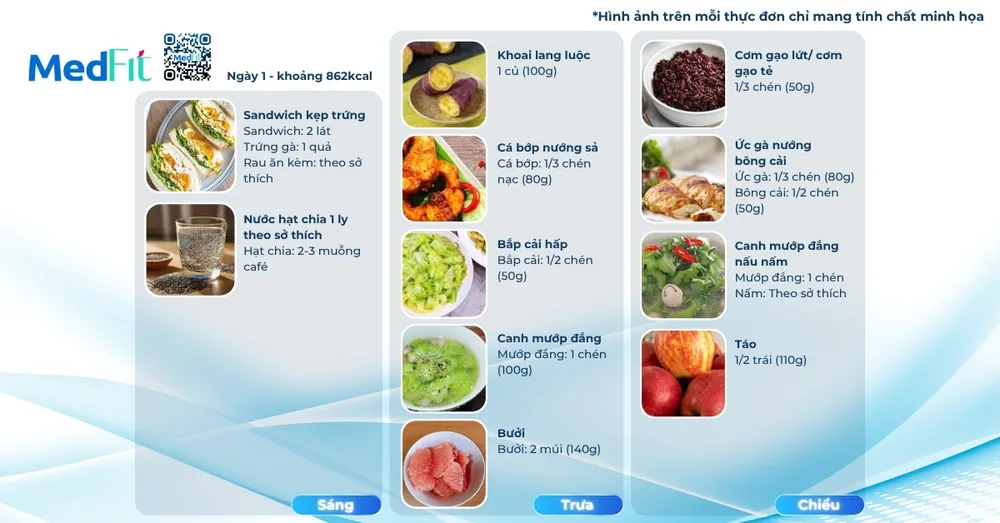
Bitter melon weight-loss meal plan Day 1 – approx. 862 kcal
Bitter melon weight-loss meal plan Day 2 – approx. 884 kcal

Bitter melon weight-loss meal plan Day 2 – approx. 884 kcal
Bitter melon weight-loss meal plan Day 3 – approx. 871 kcal
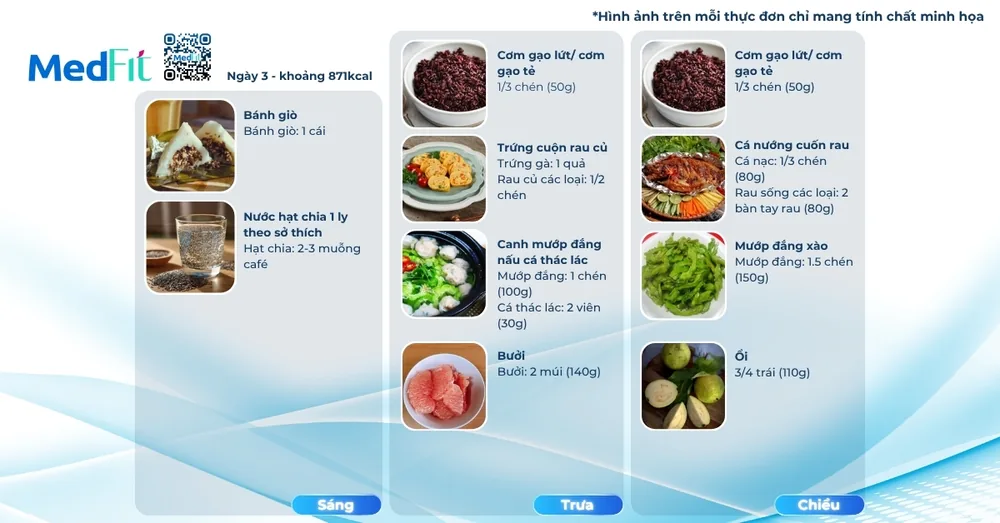
Bitter melon weight-loss meal plan Day 3 – approx. 871 kcal

Mistakes to avoid when using bitter melon for weight loss
A fairly common mistake is eating excessive amounts of bitter melon or drinking bitter melon juice daily in hopes of rapid weight loss results. In reality, there is currently no evidence that increasing bitter melon intake leads to more effective fat reduction. On the contrary, excessive consumption can cause digestive discomfort in some individuals, such as bloating, abdominal pain, or diarrhea.
Many people also overuse bitter melon capsules or supplements, assuming they are a natural and safe weight-loss solution. However, current studies have yet to clearly prove the weight-loss efficacy of these products in humans. Additionally, bitter melon can affect blood sugar levels, so individuals taking diabetes medications or those with underlying medical conditions should exercise caution and consult a doctor before regular use.
Another mistake is focusing solely on eating bitter melon while neglecting a proper diet and exercise routine. No single food can replace the role of managing total calorie intake, ensuring balanced nutrient groups, and maintaining regular workouts during fat reduction.
Finally, do not use bitter melon to replace other food groups or follow overly restrictive diets centered solely around bitter melon. Doing so can cause nutritional imbalances and increase the risk of energy and essential nutrient deficiencies, ultimately harming your health and long-term weight-loss outcomes. If you wish to lose weight or have metabolic conditions, consult a doctor or nutrition specialist for guidance on building a suitable meal plan.

Consult a nutrition specialist on a safe, effective weight-loss diet
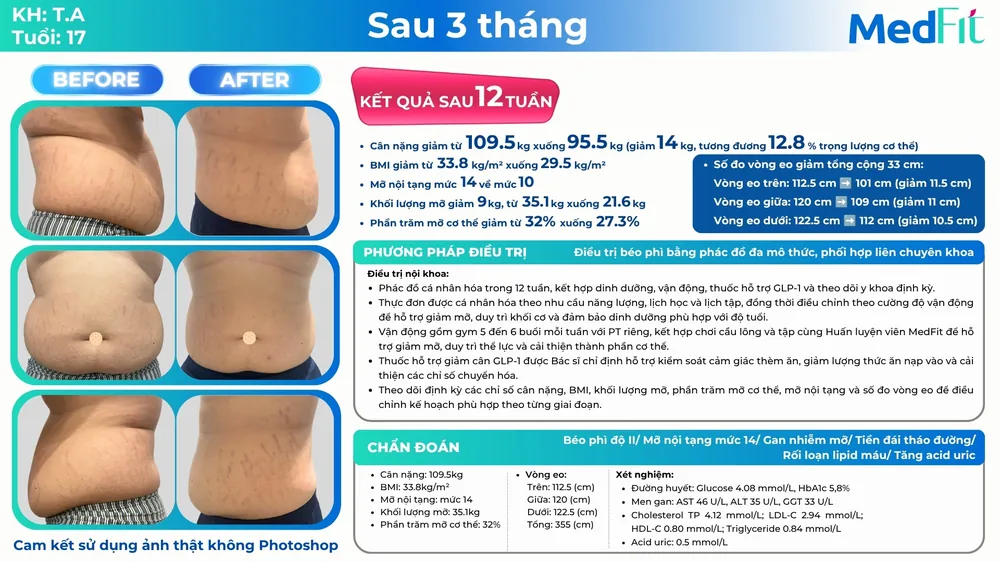
Weight-Loss Clinical Cases at MedFit Clinic
Bitter melon is a low-calorie food rich in fiber, vitamins, minerals, and beneficial antioxidant compounds. While some studies suggest that the active compounds in bitter melon may support metabolism and blood sugar regulation, there is still insufficient evidence to confirm that eating bitter melon directly promotes weight management or significant fat reduction in humans.
Therefore, bitter melon can be included as part of a healthy, varied diet, but it should not be regarded as a specific weight management food or relied upon for weight management. Long-term fat reduction still depends on building a balanced diet, maintaining an appropriate calorie deficit, and combining regular physical activity.
Are you trying to lose weight but unsure what to eat, how much to eat, and how to build a suitable meal plan? The team of doctors and nutrition specialists at MedFit will partner with you to develop a personalized nutrition and exercise plan tailored to your health status, daily habits, and individual goals. A scientific weight management protocol not only helps improve body weight but also supports metabolic health and long-term maintenance. Let MedFit help you achieve weight management safely, effectively, and sustainably.
References
- Dahlquist A, Jandali D, Nauman MC, Johnson JJ. Clinical application of Momordica charantia (bitter melon) for reducing blood sugar in type 2 diabetes mellitus. Int J Nutr. 2023;7(4):8–26. doi:10.14302/issn.2379-7835.ijn-23-4737
- Zou Y, Zou W, Jahangir M, Haedi A. The effects of bitter melon (Momordica charantia) on anthropometric indices in adults: a systematic review and meta-analysis of randomized controlled trials. Prostaglandins Other Lipid Mediat. 2024;174:106877. doi:10.1016/j.prostaglandins.2024.106877
- Bao B, Chen YG, Zhang L, Xu YLN, Wang X, Liu J, et al. Momordica charantia (bitter melon) reduces obesity-associated macrophage and mast cell infiltration as well as inflammatory cytokine expression in adipose tissues. PLoS One. 2013;8(12):e84075. doi:10.1371/journal.pone.0084075
- Ajmera, R. (2026). 6 Benefits of Bitter Melon (Bitter Gourd) and Its Extract. Healthline. [online] Available at: https://www.healthline.com/nutrition/bitter-melon [Accessed 26 November 2026]
- Fan M, Kim EK, Choi YJ, Tang Y, Moon SH. The role of Momordica charantia in resisting obesity. Int J Environ Res Public Health. 2019;16(18):3251. doi:10.3390/ijerph16183251
- Chen Q, Chan LLY, Li ET. Bitter melon (Momordica charantia) reduces adiposity, lowers serum insulin and normalizes glucose tolerance in rats fed a high fat diet. J Nutr. 2003;133(4):1088–1093. doi:10.1093/jn/133.4.1088