


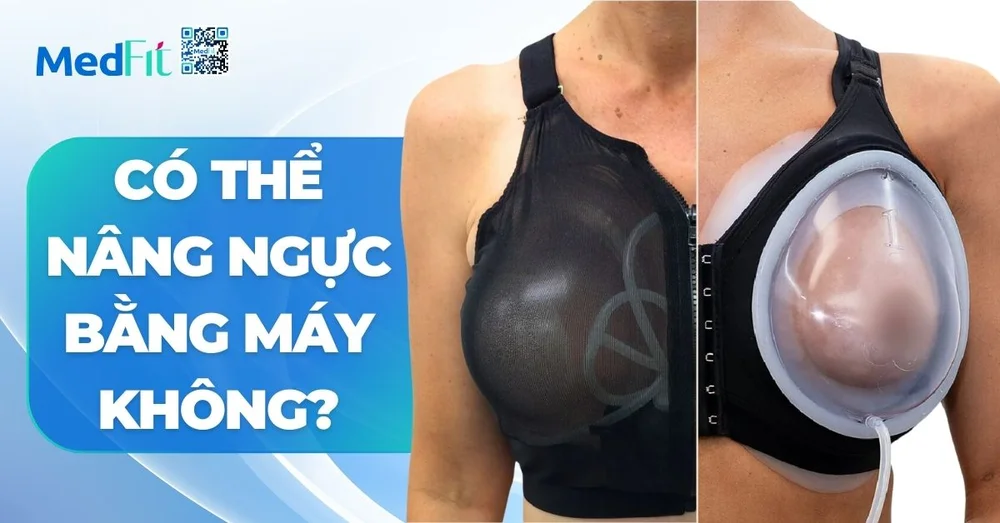
The demand for breast enhancement has grown increasingly as body aesthetics have become an important standard in modern society. Among available options, device-assisted breast enhancement is attracting many women with promises of non-surgical and painless breast enlargement. However, does this method truly deliver noticeable results or is it simply a waste of money? The article below analyzes device-assisted breast enhancement technology, evaluates its practical feasibility, and provides a quick comparison with other popular breast enhancement methods today.
- 1. What is device-assisted breast enhancement?
- 2. Should you try device-assisted breast enhancement?
- 3. Pros and cons of device-assisted breast enhancement
- 4. Quick comparison of popular breast enhancement methods today
- 4.1. Autologous fat grafting
- 4.2. Breast implant placement
- 4.3. Filler injections
What is device-assisted breast enhancement?
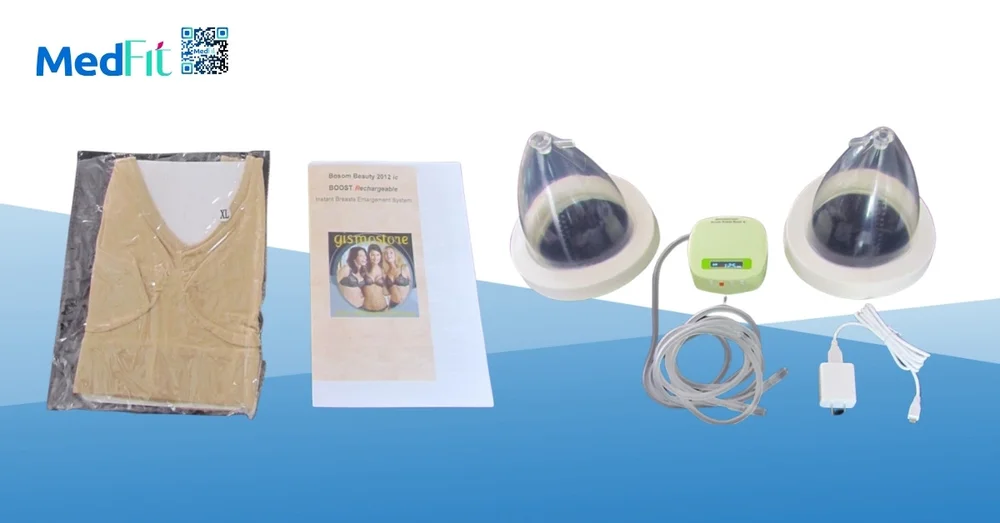
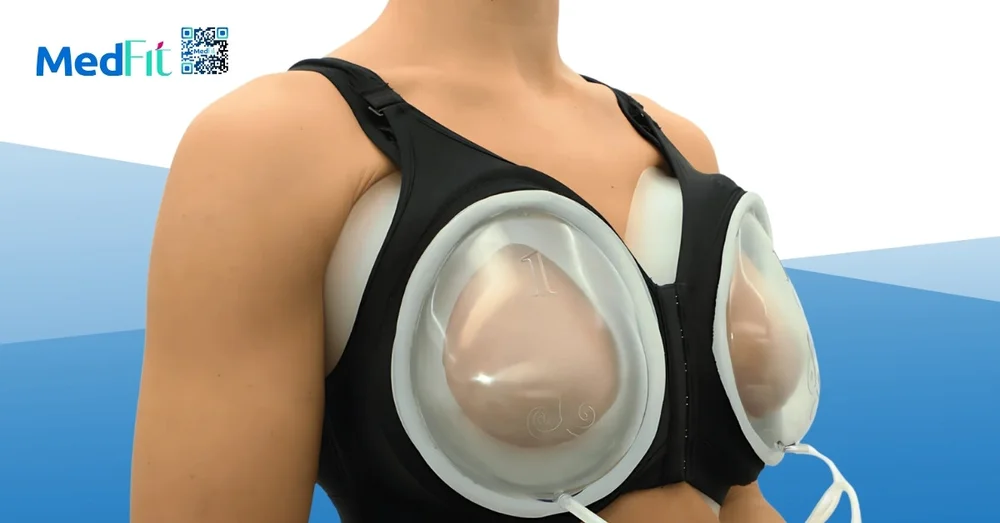
Device-assisted breast enhancement, also known as non-invasive external tissue expansion, increases breast volume without surgery or medication. This method uses dome-shaped cups connected to a vacuum suction system acting directly on the breasts to stimulate tissue growth.
The mechanism of this technology is based on the principle of mechanotransduction in cell biology. When the device maintains a gentle vacuum suction with a continuous negative pressure of around 20 mmHg on the breasts, this mechanical traction stimulates adipose and glandular tissue cells to divide and expand in volume.
Similar to skin expansion or distraction osteogenesis in regenerative medicine, the entire breast structure increases in size naturally while preserving its original physiological architecture intact.
Some popular device-assisted breast enhancement systems on the market today include:
- Brava System
- Evebra
- Noogleberry
- Bosom Beauty
Should you try device-assisted breast enhancement?
From a medical perspective, device-assisted breast enhancement does produce real results thanks to a clear biological mechanism. It is a safe aesthetic option as it is completely non-invasive, painless, leaves no surgical scars, and requires no recovery time.
The 20 mmHg pressure applied to the breasts is very gentle, comparable to normal atmospheric pressure changes, so it does not increase the risk of breast cancer or cause breast deformity. By stimulating balanced growth of both adipose and glandular tissue, the enlarged breasts retain a natural softness.
However, the biggest barrier of this method lies in its practical feasibility. Users must wear bulky devices for 10-12 hours per day continuously for 10-12 weeks. Wearing the device for hours on end easily causes stuffiness, skin redness/imprints, and major disruption to sleep and daily activities.
Clinical studies report that nearly 30% of users drop out midway because they cannot maintain such a demanding schedule. Moreover, the achieved results are quite modest, with breast volume increasing by an average of only 50-100 mL—equivalent to about half to one cup size—and may decrease slightly after discontinuing use.
Device-assisted breast enhancement is only suitable for those with plenty of free time, strong persistence, and modest expectations for breast size improvement. Busy individuals or those expecting noticeable, rapid changes should consider other more suitable aesthetic methods.
Pros and cons of device-assisted breast enhancement
Breast enhancement using external tissue expansion devices has been documented in scientific literature for both safety and its ability to naturally increase breast volume. Nevertheless, this technology presents both notable medical advantages and practical barriers during use.
Advantages
- Achieves high safety thanks to its non-surgical, non-invasive mechanism that causes no pain or surgical scars.
- Stimulates even development of adipose and fibroglandular tissue, preserving natural breast structure.
- Does not increase breast cancer risk and does not cause sagging during the treatment process.
- Boosts confidence and gradually improves body contours without surgery or filler injections.
Disadvantages
- Requires very long and strict daily wear times, causing major inconvenience for work, sleep, and daily life.
- High dropout rate because users struggle to maintain strict discipline over an extended period.
- Volume increase is relatively modest and breast size may decrease slightly after stopping device use.
- Enlarged breasts will still sag over time as the breasts become larger and heavier.
Quick comparison of popular breast enhancement methods today
Alongside device-assisted breast enhancement, aesthetic medicine currently uses three popular breast enhancement methods including autologous fat grafting, breast implant placement, and filler injections. Each method has its own distinct characteristics in terms of invasiveness, effectiveness, and safety.
| Criteria | Autologous fat grafting | Breast implant placement | Filler injections |
| Invasiveness | Mild (liposuction and fat transfer) | High (surgical dissection) | Minimal (direct injection) |
| Size increase efficacy | Moderate, natural | Significant, customizable as desired | Mild, temporary |
| Longevity | Several years (depends on fat survival rate) | 10-20 years (implant replacement may be needed after 10 years) | 6-18 months |
| Safety profile | High safety (uses autologous tissue) | Depends on the Doctor’s surgical technique and implant quality | Extremely high risk (not FDA-approved) |
Autologous fat grafting
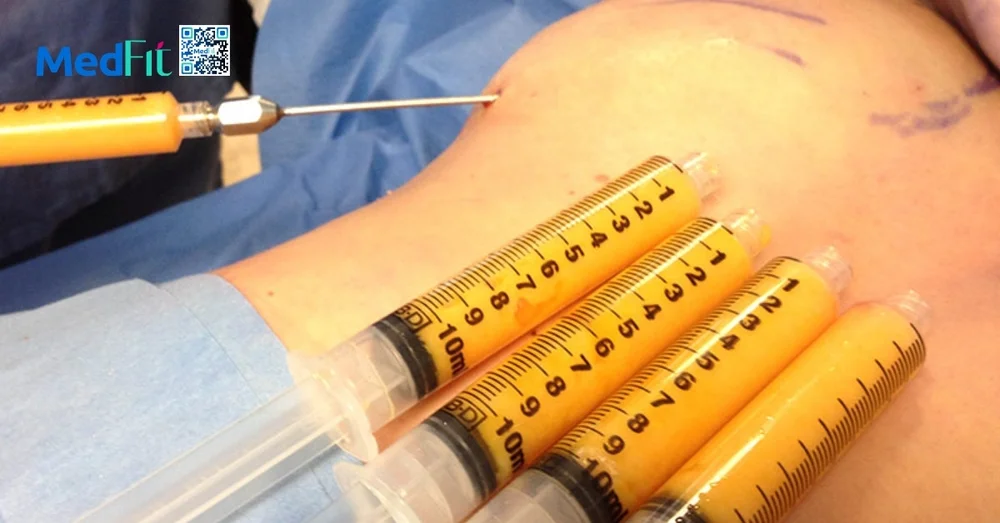
This method uses fat harvested from areas with excess adipose tissue such as the abdomen, thighs, or buttocks, which is purified using modern technology and then grafted directly into the breasts. The procedure yields natural results by using the body’s own fat tissue, giving the breasts ideal softness. Additionally, liposuction from donor areas offers a dual aesthetic benefit—slimming body contours while enhancing the bust—with virtually no allergic reaction or rejection.
However, autologous fat grafting depends entirely on available fat reserves, making it unsuitable for overly thin individuals. Because part of the grafted fat is naturally reabsorbed by the body, patients often need multiple sessions to achieve their desired outcome.
This method is also unsuitable if the goal is a substantial increase in breast size, as volume gain is typically moderate. To ensure safety, the procedure must be performed by a qualified Doctor at a reputable aesthetic medical facility.
Breast implant placement
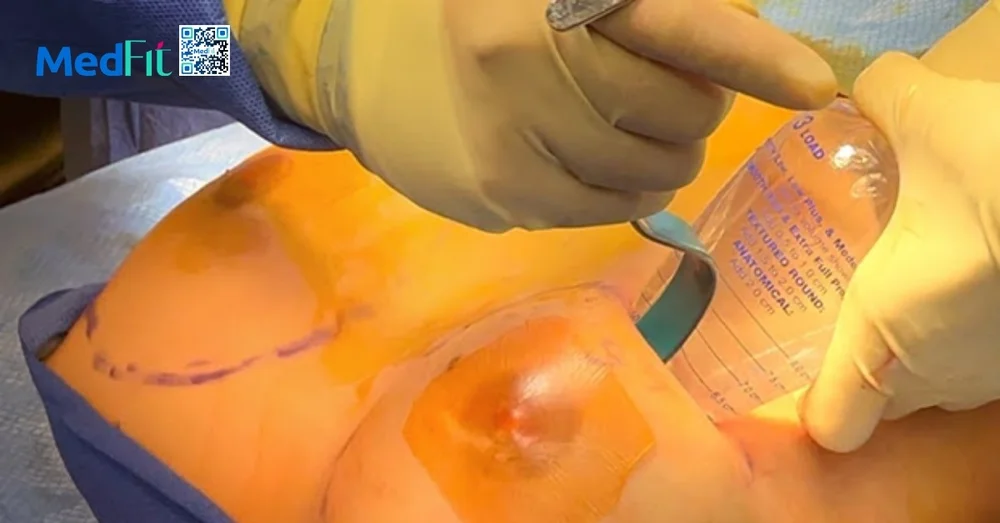
This is a surgical procedure that places silicone gel or saline implants beneath the pectoral muscle or breast glandular tissue. Its greatest advantage is the ability to significantly increase breast size and easily shape a fuller, well-proportioned bust as desired. Results are long-lasting, enduring for 10-20 years, making it well-suited for naturally small breasts, postpartum sagging, or volume loss after weight loss.
Nevertheless, this is an invasive surgical procedure requiring general anesthesia, causing pain, and needing 6-8 weeks for recovery. Patients face potential complications such as capsular contracture, infection, reduced or lost nipple sensation, and implant leakage or rupture.
Notably, breast implants do not last a lifetime; they have an average lifespan of about 10 years, after which replacement surgery may be required. Additionally, implants may interfere with mammography during breast cancer screening and affect breastfeeding depending on implant placement and surgical technique.
Filler injections
Filler injection is a non-surgical option that provides a quick, modest increase in breast size without long downtime. However, this method is not approved by the US FDA due to serious potential risks such as infection, lump formation, breast deformity, or allergic reactions.
Previously, Macrolane filler containing hyaluronic acid was once used for breast augmentation but was discontinued in 2012 because it interfered with X-ray imaging, making breast cancer detection difficult.
Furthermore, filler results are only temporary, lasting 6-18 months, and require very high recurring costs to maintain long-term outcomes. Currently, the US FDA approves only two safe breast augmentation methods: breast implant surgery and autologous fat grafting.

Device-assisted breast enhancement is a scientifically grounded approach, but its practical applicability is low because it demands too much time and delivers only relatively modest results. If you are seeking a noticeable and long-lasting change, breast implant surgery or autologous fat grafting remain the two medically approved, safe options.
As a Clinic specializing in medical-grade weight management and body restructuring, MedFit delivers personalized solutions designed directly by specialist Doctors. Protocols at MedFit not only help you achieve a slim, well-proportioned physique but also preserve your natural curves. Contact MedFit today for an examination and consultation on the most suitable treatment roadmap.
References
- Khouri RK, Schlenz I, et al. “Nonsurgical breast enlargement using an external soft-tissue expansion system“. Plast Reconstr Surg. 2000;105(7):2500-2514. doi:10.1097/00006534-200006000-00032
- Mestak O, Mestak J, et al. “Breast Reconstruction after a Bilateral Mastectomy Using the BRAVA Expansion System and Fat Grafting“. Plast Reconstr Surg Glob Open. 2013;1(8):e71. Published 2013 Dec 6. doi:10.1097/GOX.0000000000000022
- Hedström K, Falk-Delgado A, Sackey H. “Complications after breast augmentation with dermal fillers containing copolyamide: A systematic review“. JPRAS Open. 2024;40:19-31. Published 2024 Jan 23. doi:10.1016/j.jpra.2024.01.009
- Ishii H, Sakata K. “Complications and management of breast enhancement using hyaluronic acid“. Plast Surg (Oakv). 2014;22(3):171-174
- Ricardo Rodriguez (2015). Fat grafting history and applications. [online] Available at: Fat grafting history and applications | ASPS [Accessed 20 December 2024]