



Crunches are a familiar exercise often chosen by people hoping to lose weight and slim their waist. However, doing many crunches does not mean belly fat will disappear quickly or body weight will automatically change. Actual results still depend on total physical activity, diet, and the ability to maintain a calorie deficit. So how do crunches support weight management, what benefits do they offer, and how should you perform them for better results?
- 1. Do crunches help you lose weight?
- 2. Health and physique benefits of crunches
- 3. How to perform crunches with proper technique
- 4. Exercise methods that effectively support weight loss and belly fat reduction
- 5. Common crunch mistakes that leave your belly looking large
- 6. Nutrition for weight loss when exercising
Do crunches help you lose weight?
Crunches do not directly cause weight loss or belly fat reduction. While this exercise burns energy and improves abdominal muscular endurance, its contribution to total daily energy expenditure is usually modest. Weight loss still depends primarily on maintaining a calorie deficit through diet and full-body physical activity. Energy expenditure is commonly estimated using MET (Metabolic Equivalent of Task), where 1 MET equals the energy expended at rest. Higher exercise intensity and longer duration result in greater calorie burn.
Reference MET values by intensity level:
| Activity Level | MET (reference) |
| Light crunches, performed slowly with rest intervals | 2,8 MET |
| Moderate-intensity crunches, performed continuously | 3,8 MET |
| Calisthenics or high-intensity exercise circuits incorporating crunches | 6,5-7,5 MET |
Energy expenditure can be estimated using the formula: kcal = MET × 3.5 × body weight (kg) × duration (minutes) / 200
For example, for a person weighing 50 kg exercising for 30–60 minutes:
- Light crunches: may burn approximately 74–147 kcal.
- Moderate-intensity crunches: approximately 100–200 kcal.
- If maintaining high intensity: at 6.5–7.5 MET, estimated energy expenditure is about 171–197 kcal in 30 minutes and 341–394 kcal in 60 minutes.
These are theoretical figures assuming the target intensity is maintained throughout the entire duration; actual calorie burn may be lower depending on rest intervals, pace, and individual fitness level.
Regarding effectiveness weight management, studies show that it is necessary to distinguish between overall weight loss and abdominal fat reduction:
- A 2023 randomized trial of 16 men with overweight compared a group combining running with abdominal endurance exercises against a running-only group, with total energy expenditure controlled to be equivalent between both groups. After 10 weeks, trunk fat in the group adding abdominal exercises decreased by about 697 g more, equivalent to 3%. However, reductions in total body fat and overall weight did not differ significantly between the two groups. These findings suggest that high-volume abdominal training may contribute to greater trunk fat reduction under certain conditions. Nevertheless, the evidence is insufficient to confirm that standard crunches can produce spot fat reduction, nor did adding abdominal exercises lead to greater overall weight or total fat loss when energy expenditure was matched. Notably, the study protocol lasted 84 minutes per session and combined running, torso rotations, and abdominal endurance exercises—not just a few sets of standard crunches.
- A study of 14 adults observed reductions in body weight and abdominal subcutaneous fat thickness after an 8-week program combining crunches, intermittent aerobic exercise, and strength training. However, the study had a small sample size, and bioelectrical impedance analysis did not show a significant reduction in total fat mass. Thus, the study primarily indicates that a combined exercise program may improve certain parameters related to body weight and abdominal subcutaneous fat. These findings are insufficient to conclude that crunches alone can directly reduce belly fat.
Overall, crunches help burn extra calories and strengthen the core muscles, though energy expenditure at light or moderate intensity is relatively low. For effective weight loss, this exercise should be combined with full-body activity, strength training, and a calorie-deficit diet rather than relying on crunches alone to lose weight or reduce belly fat.
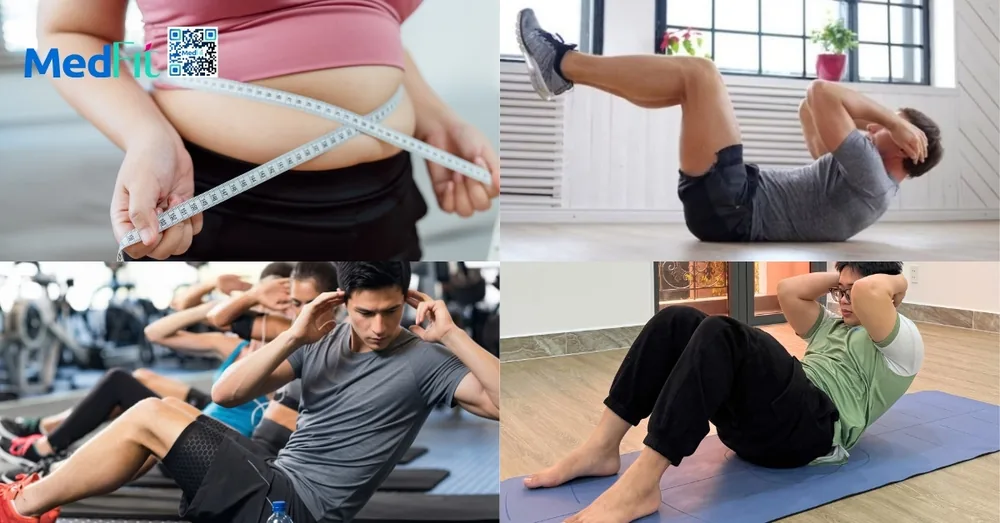
Crunches strengthen core muscles but burn relatively few calories, so they must be combined with full-body exercise and a calorie-deficit diet for effective weight loss

Health and physique benefits of crunches
Crunches primarily target the abdominal muscles and can provide benefits for strength, trunk control, and physique when performed with proper technique as part of a well-rounded training program.
Increasing abdominal strength and endurance
Crunches engage the abdominal muscles, particularly the rectus abdominis and internal obliques. An electromyography study on 20 participants showed these two muscle groups are prominently activated during curl-ups. When practiced regularly, crunches help improve abdominal strength and endurance, making the core stronger.
Supporting trunk control and mobility
When incorporated into a comprehensive core training program, crunches can help improve trunk control and posture. A randomized trial of 138 young men found that a 6-week core training program—including McGill curl-ups along with planks, bird dogs, and other stabilization exercises—improved certain measures of spinal posture and trunk control.
Improvements in trunk flexor and back extensor endurance, as well as lumbopelvic control, can also support daily activities such as standing, bending, twisting, or lifting objects. However, these benefits belong to core training as a whole and cannot be attributed solely to crunches.
Supporting body tone when paired with body fat management
Doing crunches regularly can make the abdominal muscles stronger and more resilient, but it does not mean waist circumference or belly fat will automatically decrease. A 6-week study noted that the group performing abdominal exercises significantly improved their curl-up repetitions without showing significant reductions in body weight, body fat percentage, or waist circumference. Therefore, for a more toned midsection and visible physique improvements, crunches must be paired with full-body exercise and a proper diet to manage body fat.

When practiced regularly, crunches can help improve abdominal strength and endurance, supporting a stronger core

How to perform crunches with proper technique
Performing crunches with proper form maximizes abdominal muscle activation while minimizing unnecessary strain on the neck and lower back:
- Lie flat on your back on a mat with your knees bent and feet flat on the floor, hip-width apart. Place your hands across your chest or lightly touch your temples. Avoid interlocking your fingers behind your head, as this can pull on your neck.
- Gently brace your core and keep your lower back stable against the mat. Exhale and slowly lift your head, shoulders, and upper back about 30–45° off the floor. Keep your chin slightly tucked, gaze diagonally upward, and avoid using momentum to jerk your torso up.
- Inhale as you slowly lower your torso back down in a controlled manner. Do not let your body drop quickly to the floor, and maintain gentle tension in your abdominal muscles throughout the movement.
- During the exercise, keep your feet on the floor, do not hold your breath, avoid straining your neck, and do not lift your torso too high. Start with a manageable number of repetitions, focus on movement quality, and stop if you experience neck or lower back pain.
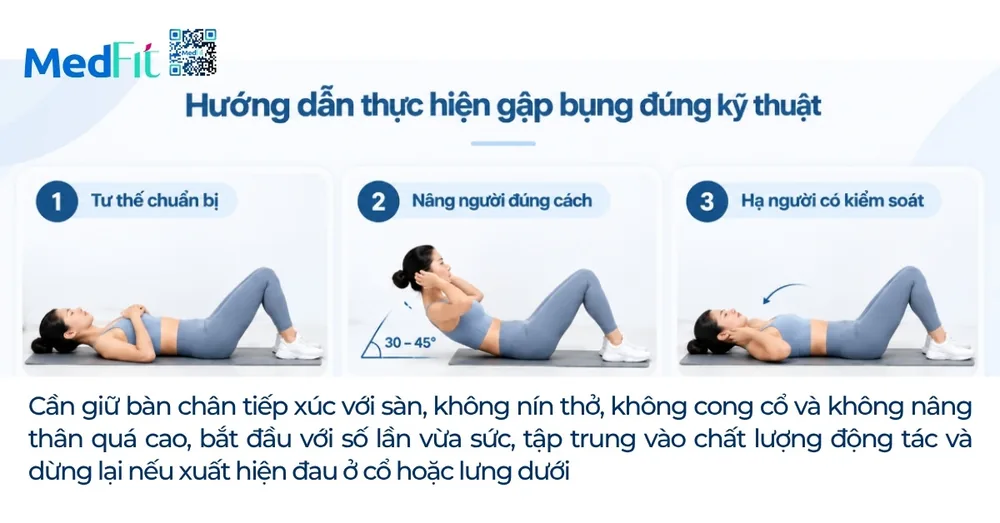
Performing crunches with proper technique enhances abdominal muscle activation while reducing unnecessary strain on the neck and lower back
Exercise methods that effectively support weight loss and belly fat reduction
No single exercise can rapidly reduce fat in one specific area. Rather than dedicating an entire workout to crunches, treat them as one component of a full-body training routine combining cardio and resistance training to increase energy expenditure, preserve muscle mass, and improve body composition.
Cardio exercises such as brisk walking, running, cycling, or swimming elevate your heart rate and burn more energy per session. When maintained consistently, cardio supports weight loss and reduces total body fat, gradually decreasing abdominal fat as well.
Resistance training with free weights, resistance bands , or bodyweight helps preserve and build muscle mass, improve strength, and minimize muscle loss during weight reduction. Exercises targeting the legs, back, chest, shoulders, and core should be combined rather than focusing solely on the abdomen.
A study on a circuit training program combining endurance and strength reported reductions in body weight and abdominal subcutaneous fat. However, these outcomes resulted from the overall intensity and total energy expenditure of the entire session rather than abdominal exercises alone. Another trial similarly demonstrated that two programs with matched energy expenditure produced comparable reductions in total fat mass and body weight, underscoring the role of overall physical activity in weight loss outcomes.
Therefore, crunches can be placed at the end of a workout or interspersed within a sequence of full-body exercises, rather than being relied upon as the sole method to lose weight or slim the waist.

Consistent physical activity helps preserve muscle mass, support metabolism, and utilize energy more efficiently
Common crunch mistakes that leave your belly looking large
The most common mistake is assuming that focusing on crunches will make your belly smaller quickly. In reality, abdominal size is also influenced by subcutaneous fat, visceral fat, bloating, and posture. Crunches primarily build abdominal strength and endurance, so stronger muscles do not automatically mean the overlying fat layer will decrease.
Many people also judge workout effectiveness by muscle burn, soreness, or heavy sweating afterward. These are primarily physiological responses to exertion and do not directly reflect how much fat has been lost. Performing repetitions too quickly or relying on the neck, hips, or momentum also prevents proper abdominal engagement while increasing the risk of neck and lower back discomfort.
In addition, simply increasing the number of crunches without adjusting difficulty, technique, and recovery time can cause progress to plateau early. Therefore, crunches should be viewed as a supportive core-strengthening exercise rather than the sole method for changing waist circumference.
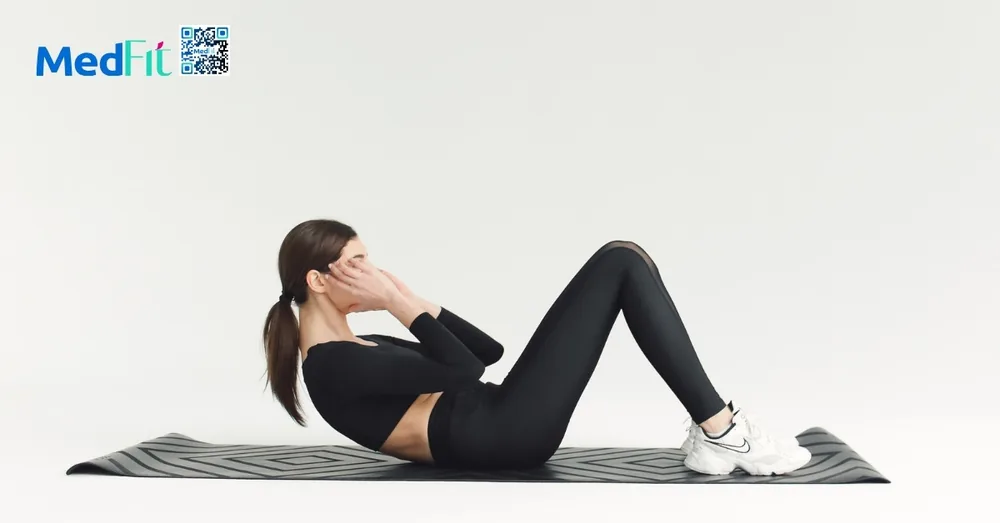
Crunches should be viewed as a supportive core-strengthening exercise rather than the sole method for changing waist size

Nutrition for weight loss when exercising
Alongside physical activity, nutrition remains the decisive factor in weight loss success. An appropriate diet should establish a moderate calorie deficit while supplying adequate protein to support muscle maintenance and recovery during training.
Meals should combine leafy greens, whole fruits, and quality carbohydrate sources such as whole grains, root vegetables, or legumes to ensure balanced nutrition and promote satiety. Meanwhile, limiting sugary foods, deep-fried dishes, unhealthy fats, and calorie-dense beverages helps control total calorie intake more effectively for sustainable weight management.

Consult a nutrition specialist on a safe, effective weight-loss diet

Weight-Loss Clinical Cases at MedFit Clinic
Crunches help build abdominal strength and endurance, but they cannot on their own achieve weight management or eliminate belly fat. To improve body weight and waist circumference, it is necessary to combine full-body exercise, resistance training, a calorie-deficit diet, and adequate rest. Crunches should be treated as one component of a comprehensive fitness routine rather than a standalone method for belly fat reduction.
If you are struggling with weight management or are unsure how to design an appropriate workout plan, you can visit MedFit for a comprehensive evaluation of your health, body composition, and lifestyle habits. Our team of doctors, nutrition specialists, and trainers will collaborate to build a personalized, multimodal roadmap for safe weight management and long-term results.
References
- Compendium of Physical Activities. (2024). Conditioning Exercise. [online] Available at: https://pacompendium.com/conditioning-exercise/ [Accessed 20 October 2026]
Šćepanović T, Marinković D, Madic D. Effects of core exercise on spine posture and trunk neuromuscular abilities in healthy, recreationally active males: a randomized controlled trial. Health Probl Civil. 2025. doi:10.5114/hpc.2025.156408
Vera-Garcia FJ, Flores-Parodi B, Elvira JLL, Sarti MA. Influence of trunk curl-up speed on muscular recruitment. J Strength Cond Res. 2008;22(3):684–690. doi:10.1519/JSC.0b013e31816d5578
Rodríguez-Perea Á, Reyes-Ferrada W, Jerez-Mayorga D, Chirosa Ríos L, Van den Tillar R, Chirosa Ríos I, et al. Core training and performance: a systematic review with meta-analysis. Biol Sport. 2023;40(4):975–992. doi:10.5114/biolsport.2023.123319
Lee K. Effects of core stability training on deep stabilizing muscle function and neuromuscular control. Medicina. 2025;61(3):364. doi:10.3390/medicina61030364
Vispute SS, Smith JD, LeCheminant JD, Hurley KS. The effect of abdominal exercise on abdominal fat. J Strength Cond Res. 2011;25(9):2559–2564. doi:10.1519/JSC.0b013e3181fb4a46
- MDPI. (n.d.). International Journal of Environmental Research and Public Health. [online] Available at: https://www.mdpi.com/journal/ijerph [Accessed 20 October 2026]
Brobakken MF, Krogsæter I, Helgerud J, Wang E, Hoff J. Abdominal aerobic endurance exercise reveals spot reduction exists: a randomized controlled trial. Physiol Rep. 2023;11(22). doi:10.14814/phy2.15853